Follow Me On Social Media!


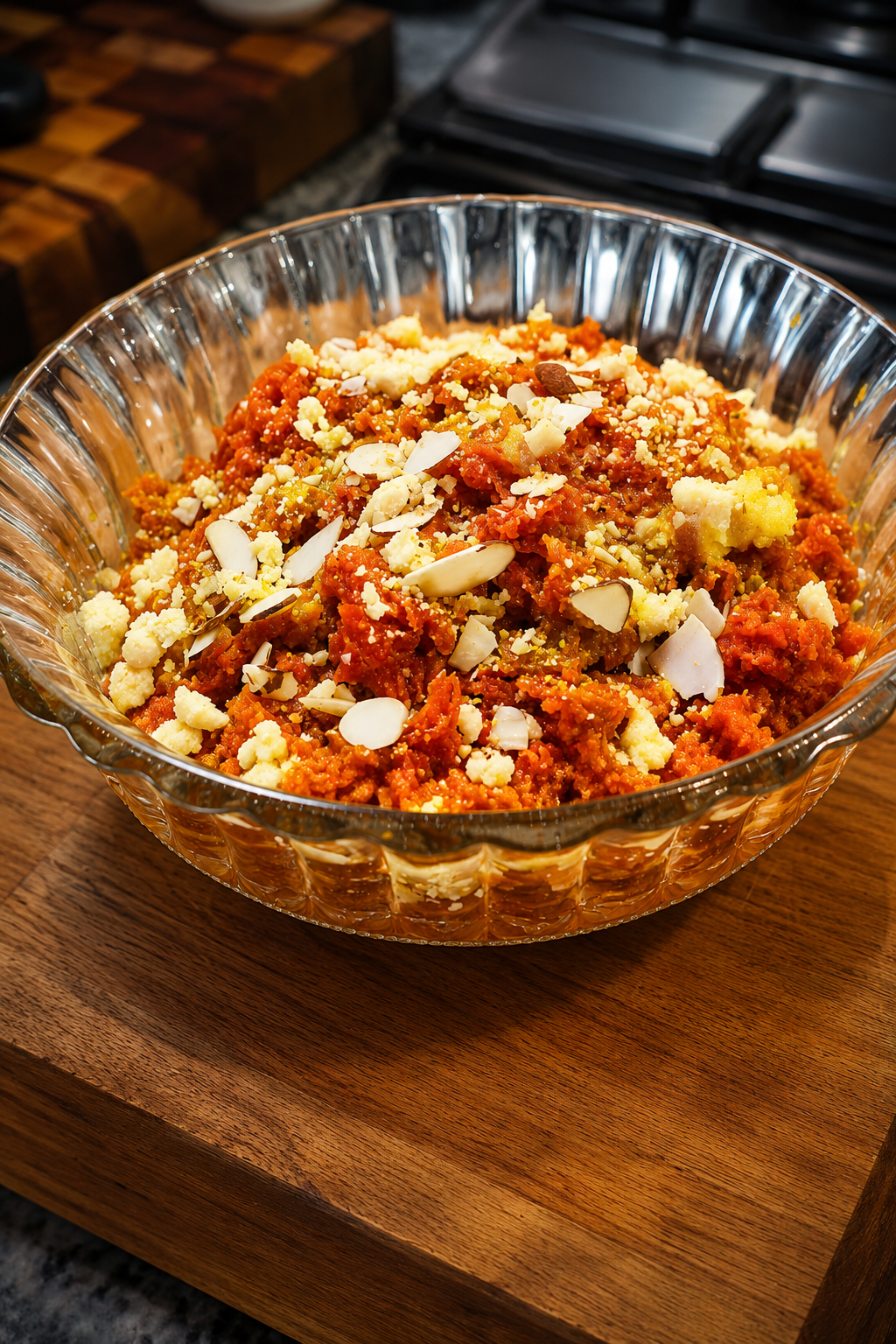
Few desserts in the world capture the rich, celebratory soul of Indian confectionery quite like Carrot Halwa, universally cherished as Gajar Ka Halwa. Revered for its deep orange hue, melt-in-your-mouth texture, and luxurious aroma, this beloved North Indian classic transforms humble winter carrots into a decadent pudding through the magic of pure desi ghee, rich milk, fragrant freshly ground green cardamom, and crunchy toasted almonds. By using sweetened condensed milk, this streamlined recipe delivers all the deep caramelization and velvety richness of slow-simmered festive halwa in just 40 minutes—making it the ultimate treat for Diwali celebrations, festive family gatherings, or cozy weekend indulgences.
In traditional Indian households, the arrival of chilly winter months is synonymous with the sweet, buttery aroma of gajar halwa simmering on the stovetop. The secret to an extraordinary carrot halwa lies in treating the carrots with care: coarsely grating them to preserve distinct, succulent strands, sautéing them in golden ghee to bloom their natural sugars, and gently braising them in dairy until every shred is infused with velvety creaminess.
While traditional recipes demand hours of standing over a hot stove to reduce gallons of whole milk and specialty khoya (milk solids), this perfected recipe pairs whole milk with sweetened condensed milk. This clever technique cuts the cooking time in half while providing an impeccably smooth, rich body with zero guesswork. Finished with a final gloss of golden ghee and the floral lift of freshly crushed green cardamom, this halwa is rich, moist, and delightfully spoonable whether served piping hot or chilled straight from the refrigerator.
Table of Contents
- What Is Carrot Halwa (Gajar Ka Halwa)?
- Why You’ll Love This Recipe
- How to Make Carrot Halwa
- What to Serve With Carrot Halwa
- Top Tips for Perfect Carrot Halwa
- Storing and Reheating Tips
- Frequently Asked Questions
- Carrot Halwa Recipe Card & Cooking Summary
- A Timeless Indian Sweet Worth Every Gentle Stir
What Is Carrot Halwa (Gajar Ka Halwa)?
Gajar Ka Halwa (often called Gajrela in Northern India and Punjab) is a traditional sweet confection crafted from grated carrots braised in milk, sugar, and clarified butter (ghee). Originating during the Mughal period and perfected across regional Indian royal courts, this dessert was historically prepared during the winter harvest when tender, juicy red Delhi carrots flooded local markets.
Unlike Western carrot cakes or baked puddings that rely on flour, leaveners, and baking pans, Indian carrot halwa is an artisanal stovetop reduction. As the grated carrots simmer in dairy, the liquids evaporate slowly, allowing the milk proteins and natural carrot sugars to caramelize together. The addition of aromatic green cardamom seeds cuts through the dairy richness with bright, herbal top notes, while toasted nuts provide a crunchy contrast to the soft, luscious pudding.
In classic royal preparations, khoya (also known as mawa)—a dense, dried whole milk solid—is folded into the simmering carrots to create a crumbly, rich finish. In this modern kitchen-tested adaptation, sweetened condensed milk acts as an instant khoya substitute, infusing concentrated dairy richness and caramelized sweetness directly into the carrots without requiring hours of manual reduction. The result is a vibrant, glossy halwa that maintains the highest standard of authentic Indian taste and texture.
Why You’ll Love This Recipe
Whether you are cooking for a festive Diwali banquet, an intimate dinner party, or a comforting family treat, this recipe guarantees luscious, foolproof results every time. Here is why you will fall in love with this method:
- Ready in 40 Minutes: Traditional methods take upwards of two hours; our condensed milk technique delivers authentic rich flavor in a fraction of the time.
- Guaranteed Moist & Glossy: Our two-stage ghee method ensures the carrots remain succulent and luxurious without ever turning dry or rubbery.
- No Specialty Ingredients Required: You don’t need to hunt for fresh khoya or mawa; simple whole milk and pantry-staple condensed milk provide superior creaminess.
- Customizable Sweetness: By controlling the amount of condensed milk added, you can tailor the sweetness precisely to your personal palate.
- Outstanding Make-Ahead Dessert: The flavors and aromas deepen as the halwa rests, making it even more delicious on the second and third days.
- Delightful Hot or Cold: Savor it steaming hot alongside a scoop of vanilla ice cream, or enjoy it chilled as a refreshing post-dinner sweet.
How to Make Carrot Halwa
Mastering carrot halwa requires attentive heat control and quality ingredients. Using fresh, juicy carrots and pure desi ghee is the foundation of an exceptional dessert. Review our quick stats, ingredient breakdown, and detailed step-by-step photo guide below before starting.
Quick Overview
- Prep Time: 15 minutes (washing, peeling & grating carrots)
- Cook Time: 30 minutes
- Total Time: 45 minutes
- Servings: 6 generous servings
- Difficulty: Easy / Intermediate
- Cuisine: North Indian / Mughlai
- Course: Dessert / Sweet Confection
Key Ingredients & Flavor Roles
- Fresh Carrots (775g): Fresh, firm carrots provide natural sweetness, vibrant color, and moisture. Grated coarsely to ensure the halwa has pleasant texture rather than a mushy baby-food consistency.
- Pure Desi Ghee (Clarified Butter): Added in two stages—first to sauté the raw carrots and unlock their aroma, and finally at the end to impart a glorious glossy sheen and deep buttery richness.
- Sweetened Condensed Milk (1 can): Replaces traditional khoya and sugar, providing instant dairy richness, caramelized depth, and smooth sweetness.
- Whole Milk (1 cup): Allows the coarsely grated carrots to gently braise and soften into tender strands without scorching.
- Green Cardamom Pods (4–5 pods): Freshly cracked and ground immediately before adding to release volatile essential oils and floral aroma.
- Flaked Almonds (2–3 tbsp): Lightly toasted in a dry pan until golden and fragrant, offering a welcome nutty crunch atop the velvety halwa.
Step-by-Step Instructions
Follow these numbered steps accompanied by process photos to create this luscious Indian dessert with confidence.
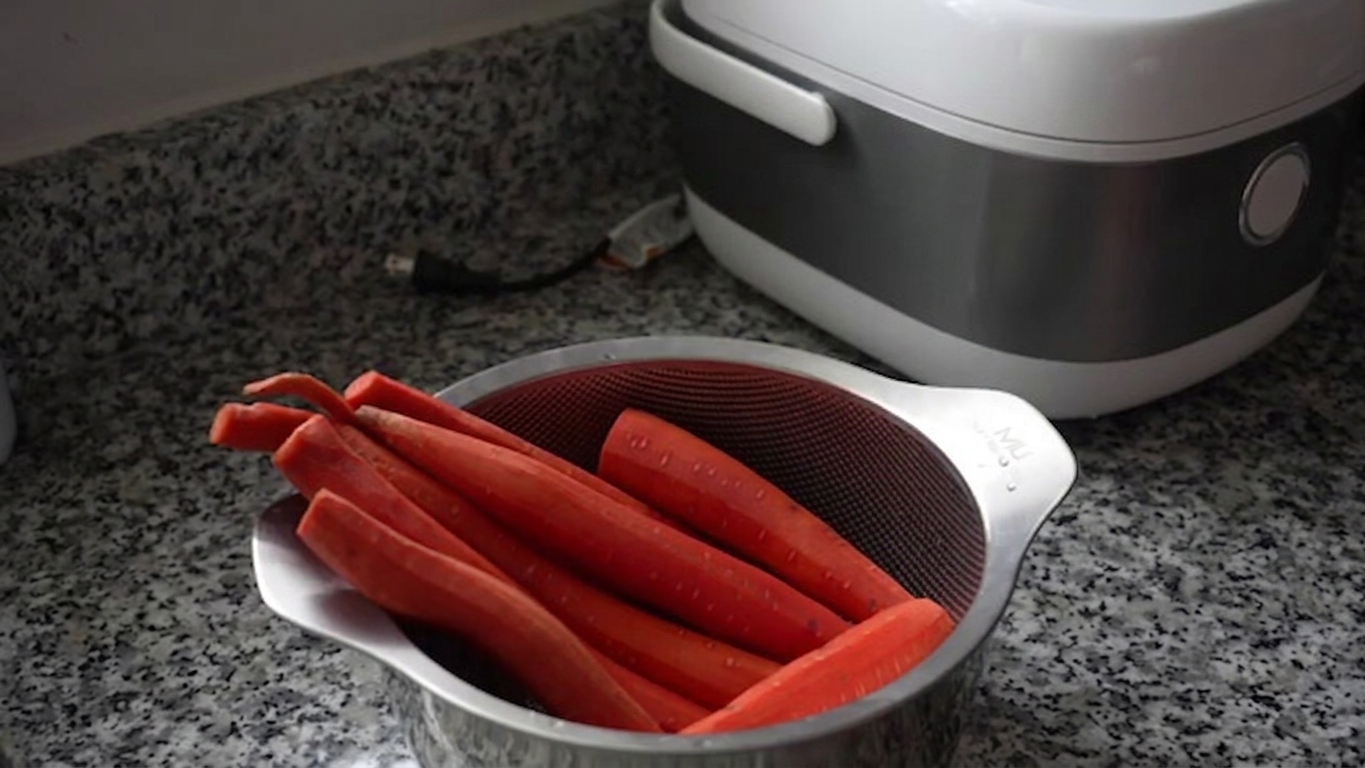
Step 1: Prep and Coarsely Grate the Carrots
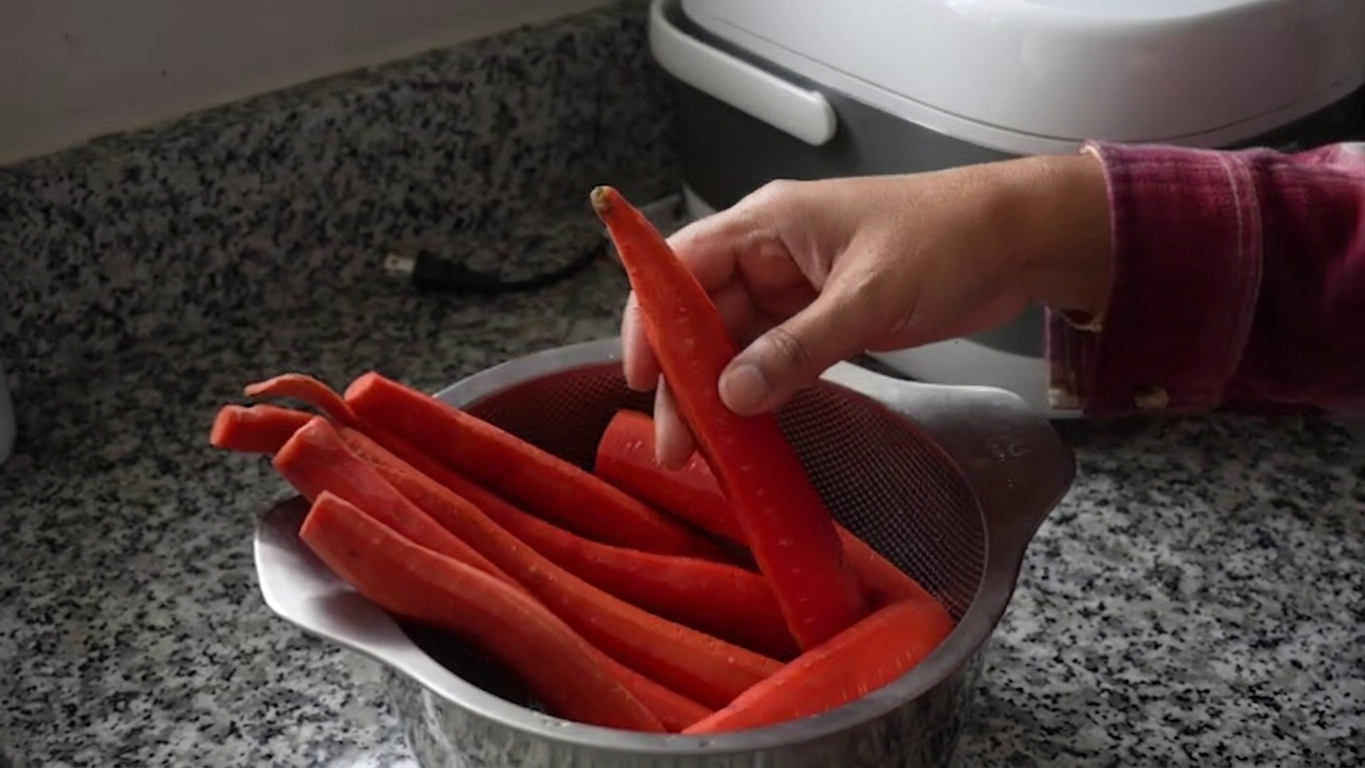
Rinse 775g of fresh carrots thoroughly under cold running water to remove any surface grit. Peel them cleanly with a vegetable peeler and trim both ends.
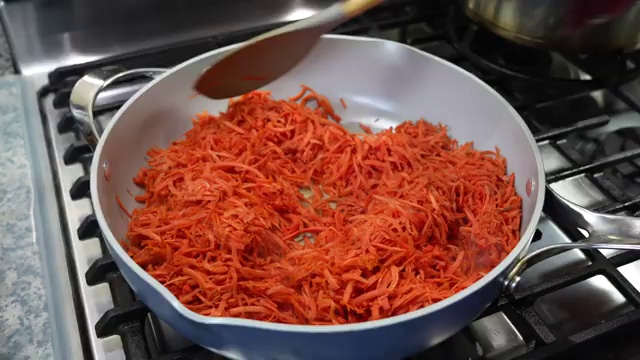
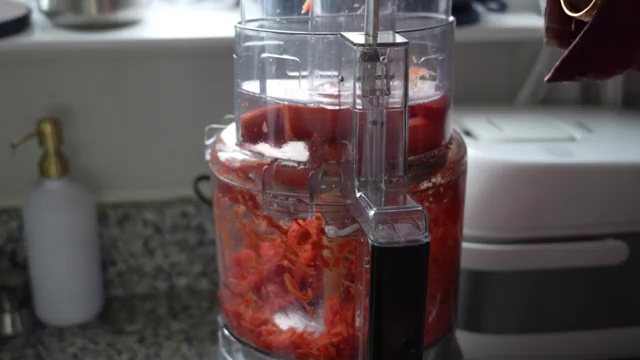
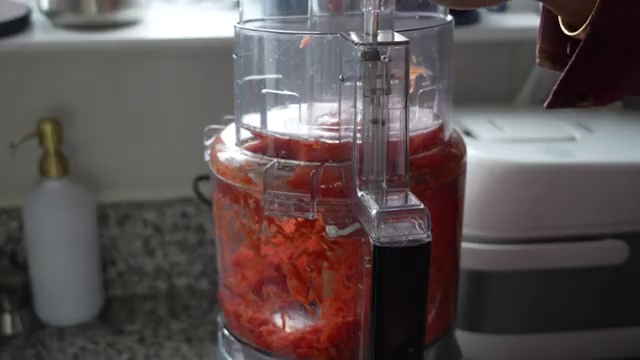
Grate the carrots using the coarse shredding disc of a food processor or the coarse side of a box grater. Chef’s Rule: Coarsely grated carrots yield distinct, succulent shreds that hold their shape during braising.
Step 2: Sauté the Carrots in Warm Ghee
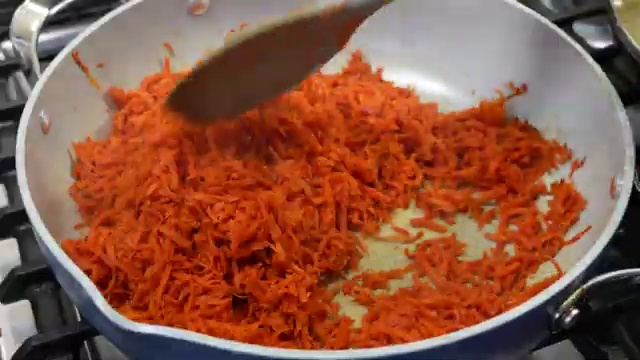
Place a large, heavy-bottomed pot or wide kadai over medium heat. Add 2 heaped tablespoons of pure ghee and allow it to melt gently until hot but not smoking.
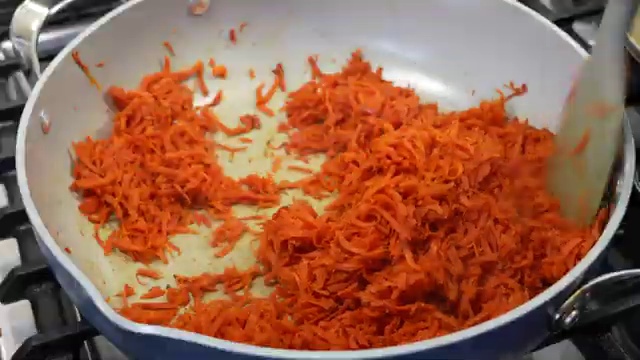
Add all the grated carrots into the warm ghee. Stir continuously with a sturdy spatula to ensure every carrot strand is glistening and evenly coated.
Sauté the carrots over medium heat for 4 to 5 minutes. As they cook, the carrots will soften slightly and release their natural juices. Continue sautéing until the excess moisture evaporates and a sweet, buttery aroma fills the kitchen.
Step 3: Add Condensed Milk and Whole Milk
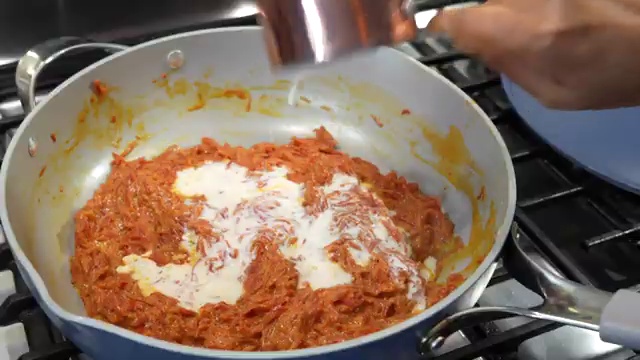
Pour in 1 can of sweetened condensed milk over the sautéed carrots. If you prefer a less sweet dessert, begin with ¾ of the can and adjust later.

Stir thoroughly until the condensed milk is evenly blended with the grated carrots, forming a creamy, rich mixture.
Pour in approximately 1 cup of whole milk and stir gently to combine all ingredients.
Step 4: Simmer Covered Over Low Heat
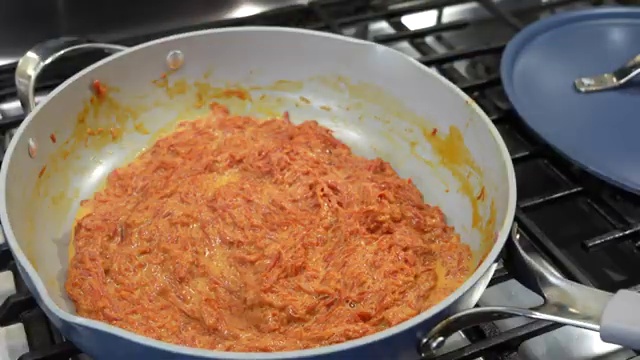
Reduce the heat to low. Cover the pan with a tight-fitting lid and let the halwa simmer gently. Stir every 3–4 minutes to prevent the milk solids from sticking to the base of the pot.

Continue simmering for 12 to 15 minutes until the carrots have absorbed most of the liquid and turned completely tender and sweet.

Step 5: Toast Almonds and Grind Fresh Cardamom
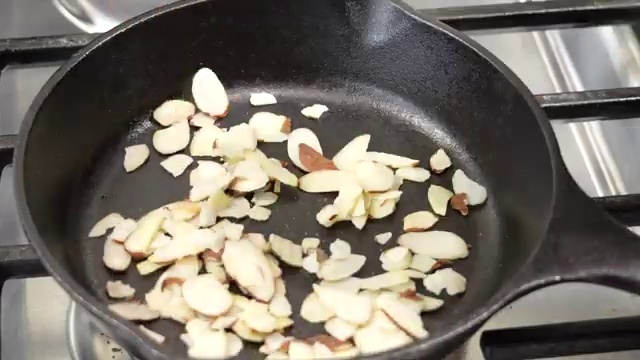
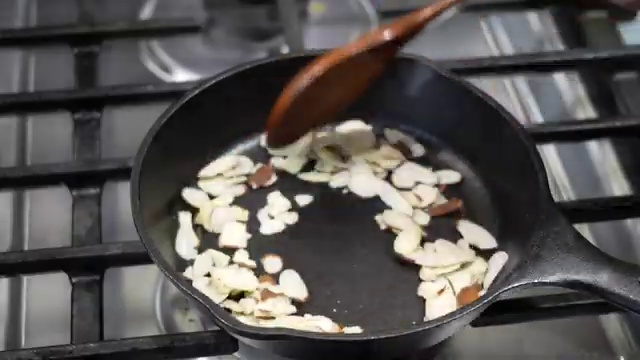
While the halwa simmers, place a small dry skillet over medium-low heat. Add 2–3 tablespoons of flaked almonds and toast for 2–3 minutes, tossing continuously until golden brown and fragrant. Transfer immediately to a small plate.


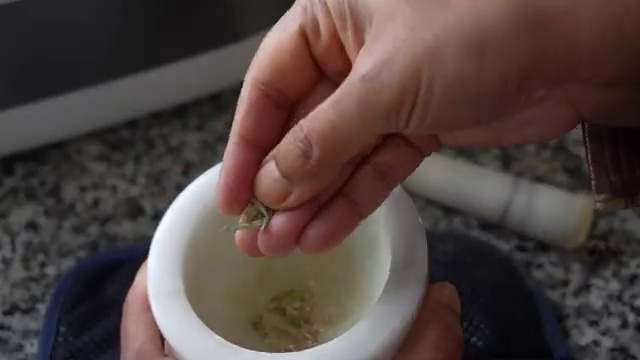
Crack open 4–5 green cardamom pods, extract the dark seeds, and discard the green husks. Grind the seeds finely using a small mortar and pestle.
Step 6: Uncover and Reduce Liquid
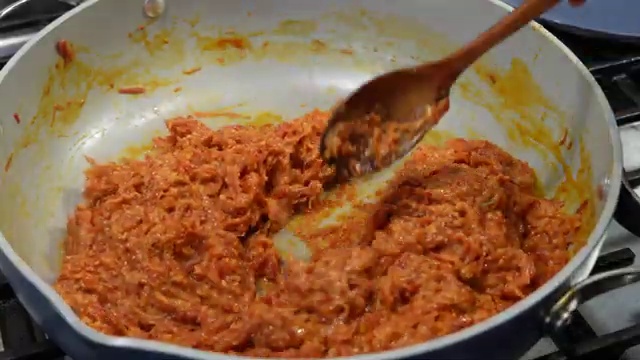
Remove the lid from the halwa pot. The carrots should look soft and glossy with most of the milk absorbed. Cook uncovered over medium-low heat for 3–4 minutes, stirring constantly, until the mixture thickens into a cohesive, pudding-like consistency.
Step 7: Add Fresh Cardamom
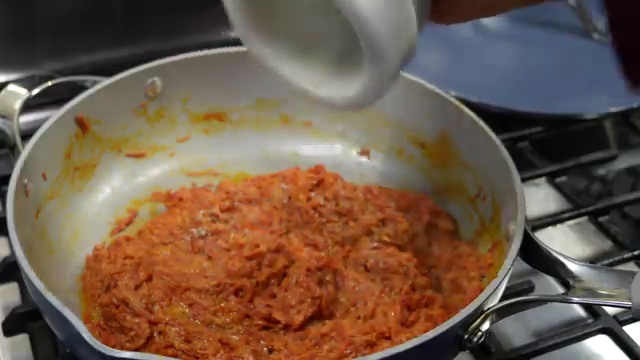
Sprinkle the freshly ground cardamom powder across the warm carrots. Stir thoroughly for 1 minute. The residual heat will instantly bloom the cardamom’s floral essential oils, filling the room with an enchanting aroma.
Step 8: Fold in the Finishing Ghee
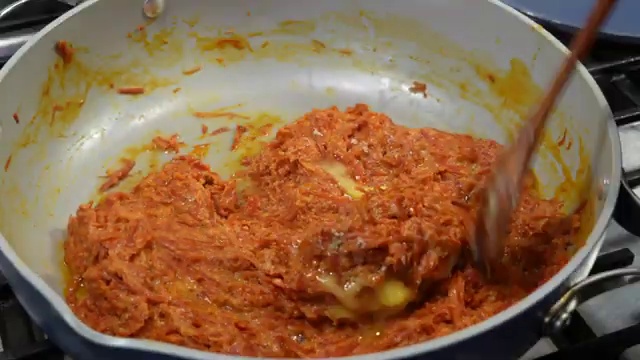
Add the remaining ¼ cup of pure ghee into the thickened halwa. This second addition of ghee (called bhunai) is essential: it glazes the carrot shreds, locks in moisture, and creates a glorious, silky mouthfeel.
Cook over medium-low heat for another 2–3 minutes, stirring constantly, until the ghee is completely absorbed and the halwa pulls away cleanly from the sides of the pan without sticking.

Step 9: Plate and Garnish with Toasted Almonds
Turn off the heat. Give the halwa a final gentle stir, taste, and adjust sweetness if desired. The texture should be soft, rich, and moist—never dry or runny.
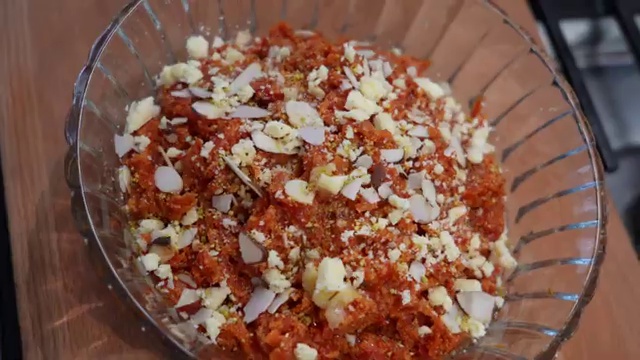
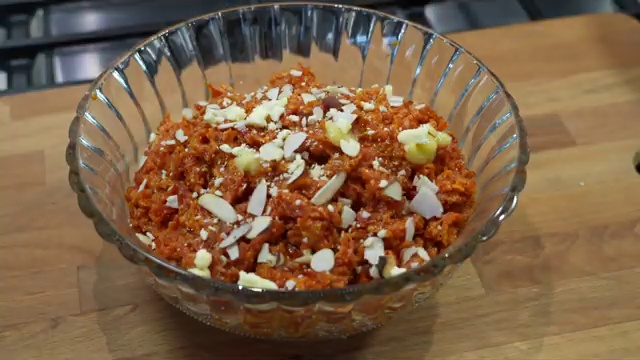
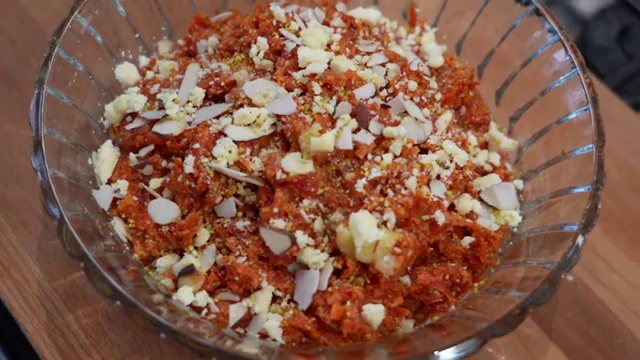
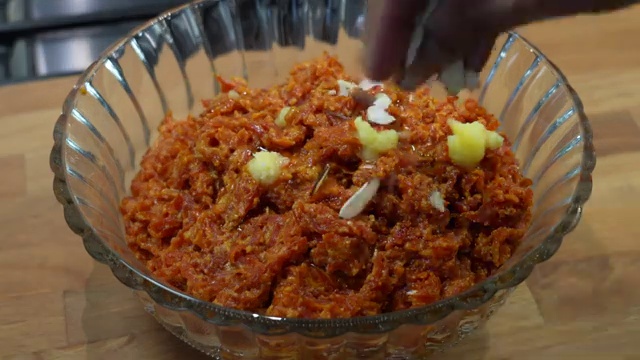
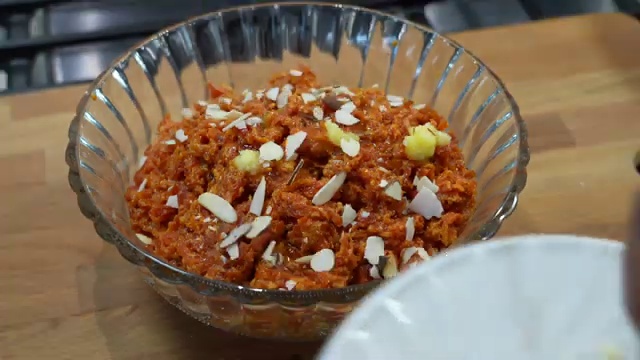
Transfer the warm halwa into a decorative serving bowl. Scatter the golden toasted flaked almonds generously over the top and serve immediately.

What to Serve With Carrot Halwa
Carrot Halwa is the ultimate show-stopping dessert to cap off an authentic Indian feast. Its rich, buttery sweetness pairs brilliantly following savory, spiced mains and regional vegetable curries. Here are our favorite menu pairing ideas:
- After Rich Festive Curries: Serve warm halwa as the sweet finale after decadent mains like ultimate butter chicken (murgh makhani) or creamy simple palak paneer.
- Following Traditional Thalis: It makes the perfect closing course to our daily Bengali dal, okra sabji & cabbage curry lunch thali or our everyday Indian home-style meal.
- Complementing Spiced Vegetable Dishes: Balance the heat of savory vegetable sides such as aloo beans dry sabji, Bengali potato and dill leaves stir-fry, or Bengali aloo fulkopir tarkari.
- With Potato & Legume Mains: Follow comforting bowls of rich aloo dum with green peas or Bengali-style rajma curry with a warm bowl of halwa.
- After Seafood Feasts: Serve as a soothing sweet finish after spicy coastal curries like authentic Bengali macher jhal (spicy fish curry).
- With Comforting Lentils & Rice: Pair after a simple meal of simple Bengali style masoor dal, easy vegetable masala rice, or our plant-based Indian home meal.
- Modern Dessert Pairings: Top warm carrot halwa with a scoop of premium vanilla bean ice cream (the hot-and-cold contrast is divine), drizzle with thick rabri, or serve alongside a hot cup of spiced masala chai.
Top Tips for Perfect Carrot Halwa
To ensure your carrot halwa achieves sweet shop quality with rich flavor and a melt-in-the-mouth texture, keep these expert chef tips in mind:
- Choose Fresh, Juicy Carrots: Buy fresh, crisp carrots rather than bagged baby carrots or pre-shredded carrots. Freshly grated whole carrots release sweet juices and natural aroma that cannot be replicated.
- Coarse Grating Is Non-Negotiable: Never puree or finely grate the carrots. Coarse shreds hold their structural integrity through the cooking process, giving halwa its signature texture rather than a paste-like baby food consistency.
- Embrace the Two-Stage Ghee Technique: Sautéing carrots in ghee at the beginning concentrates their natural sugars, while folding in the final ghee at the end creates a luscious glaze that prevents the halwa from drying out.
- Grind Cardamom Fresh: Always crush green cardamom seeds right before adding. Pre-ground commercial cardamom loses its aromatic volatile oils quickly and will lack the vibrant floral lift essential to authentic halwa.
- Do Not Over-Dry the Halwa: Turn off the heat while the halwa is still thick, creamy, and visibly moist. Halwa naturally firms up as it cools, so leaving a slight glossy moisture in the pan ensures tender perfection.
- Stir Regularly on Low Heat: Because milk and condensed milk contain high concentrations of milk sugars, cook on gentle heat and stir frequently to avoid scorching the bottom of your pot.
Storing and Reheating Tips
Carrot Halwa stores exceptionally well, making it one of the best make-ahead desserts for entertaining and holiday gifting:
- Refrigeration: Allow the halwa to cool completely to room temperature. Transfer to an airtight glass container and store in the refrigerator for up to 7 to 8 days.
- Freezing: Gajar Ka Halwa freezes wonderfully for up to 3 months. Portion the cooled halwa into airtight, freezer-safe containers. Thaw overnight in the refrigerator before reheating.
- Reheating on the Stovetop: Transfer the desired portion to a small saucepan over low heat. Add 1–2 tablespoons of whole milk or a small dab of ghee, and warm gently while stirring for 2–3 minutes to restore its freshly cooked gloss.
- Reheating in the Microwave: Warm individual bowls in the microwave for 30–45 seconds. Stir halfway through to ensure even heating.
Frequently Asked Questions
Can I use traditional khoya (mawa) instead of condensed milk?
Yes! If you have fresh khoya (mawa), sauté the carrots in ghee, simmer them with 3–4 cups of whole milk until reduced, then fold in 150g of crumbled khoya and ¾ cup of granulated sugar during the final 10 minutes of cooking.
Can I make this halwa using only whole milk?
Yes. If omitting condensed milk, use 4 cups of whole milk and ¾ cup of regular sugar. The carrots will need to simmer uncovered over medium-low heat for 45–60 minutes until the milk reduces and thickens naturally into milk solids.
Why did my carrot halwa turn out watery?
Carrots naturally contain significant moisture. If your halwa looks loose or watery, simply remove the lid, increase the heat to medium, and sauté continuously for 4–5 minutes until the excess liquid evaporates into steam.
Can I add other nuts and dried fruits?
Absolutely! Along with toasted flaked almonds, golden raisins (kishmish), toasted cashew halves, and slivered pistachios are traditional additions that add wonderful texture and color.
Carrot Halwa Recipe Card & Cooking Summary
Carrot Halwa (Gajar Ka Halwa)
A luscious 40-minute Indian carrot pudding crafted with coarsely grated carrots, pure desi ghee, condensed milk, freshly ground cardamom, and toasted almonds.
Prep Time: 15 mins | Cook Time: 30 mins | Total Time: 45 mins | Servings: 6 | Cuisine: North Indian | Diet: Vegetarian / Gluten-Free
Ingredients Summary
- 775g fresh carrots, rinsed, peeled, and coarsely grated
- 2 heaped tbsp pure ghee (for starting) + ¼ cup ghee (for finishing)
- 1 can (approx. 400g) sweetened condensed milk (adjust to taste)
- 1 cup whole milk
- 4–5 green cardamom pods, seeds extracted and finely ground
- 2–3 tbsp flaked almonds, toasted in a dry skillet
Quick Method
- Melt 2 tbsp ghee in a heavy pot over medium heat. Add grated carrots and sauté for 4–5 minutes until softened.
- Stir in condensed milk and whole milk until evenly blended.
- Cover and simmer on low heat for 12–15 minutes until carrots absorb the liquid and turn tender.
- Uncover and cook on medium-low for 3–4 minutes to reduce excess moisture.
- Fold in freshly ground cardamom powder and the remaining ¼ cup ghee. Stir for 2–3 minutes until glossy.
- Transfer to a serving bowl, garnish with golden toasted almonds, and serve warm or chilled.
A Timeless Indian Sweet Worth Every Gentle Stir
Few culinary creations capture the warmth of celebratory Indian hospitality quite like a bowl of freshly prepared Gajar Ka Halwa. With its luscious strands of sweet carrots, rich aroma of clarified butter, and intoxicating floral lift of fresh cardamom, this beloved dessert proves that pure, wholesome ingredients make the most unforgettable treats.
Whether you share it warm around a festive holiday table with family or savor a chilled spoonful as a quiet evening indulgence, this foolproof recipe brings authentic royal comfort to your modern kitchen. Gather your fresh carrots, toast your almonds, and treat your loved ones to this timeless sweet treasure today!