Follow Me On Social Media!


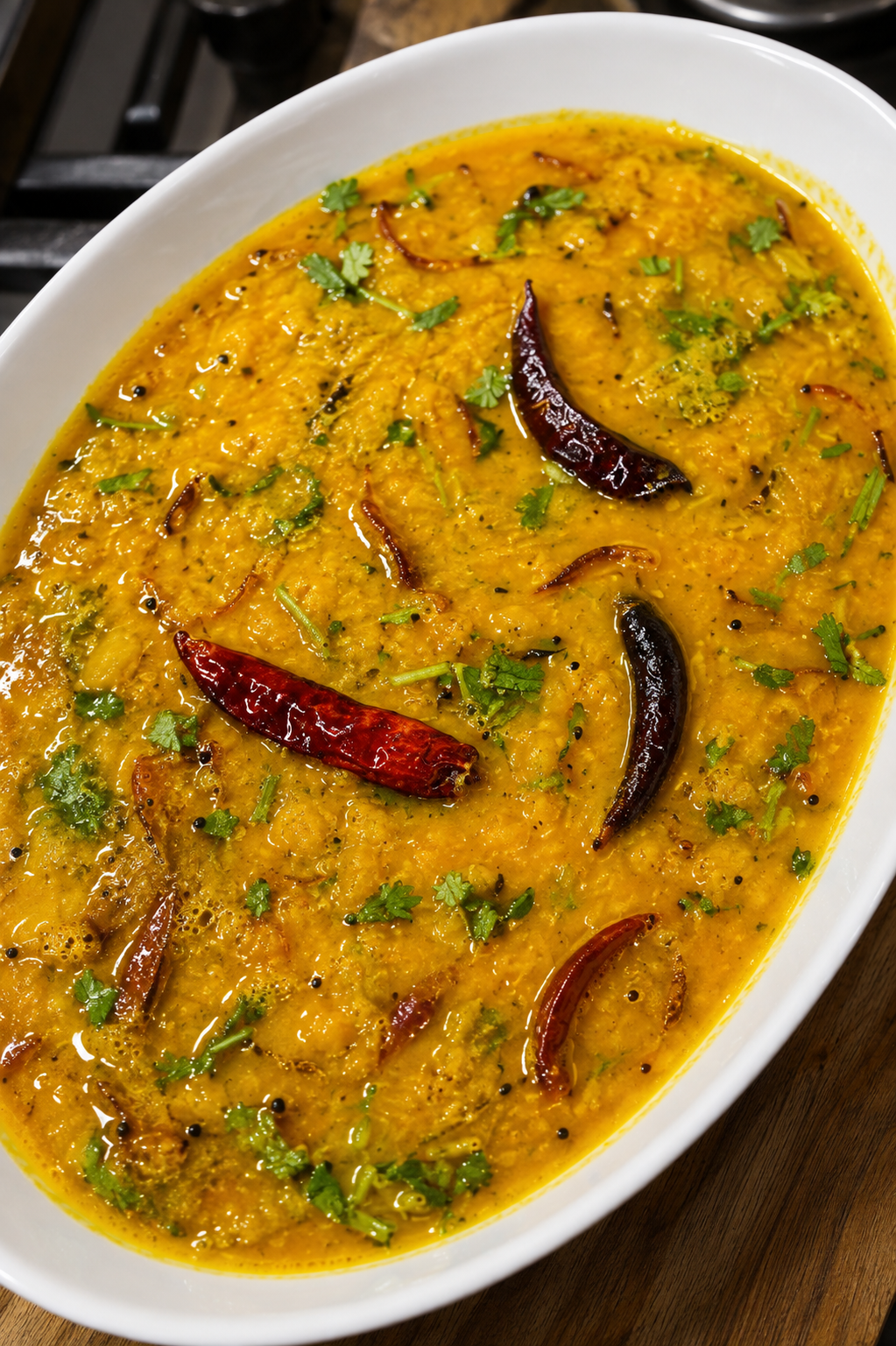
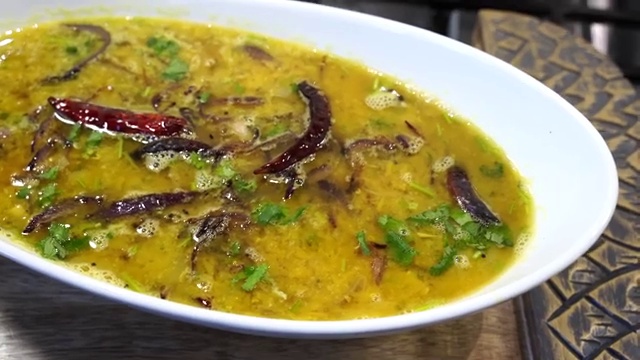
In every Bengali home, nothing spells pure everyday comfort quite like a steaming bowl of Simple Bengali Style Masoor Dal. Made with split red lentils, garlic, turmeric, and whole green chilies, this humble yet intensely flavorful dal is cooked until velvety smooth and finished with a sizzling tempering (tadka or chaunk) of panch phoron, whole dried red chilies, and caramelized golden onions. Quick to prepare in just 35 minutes with no pre-soaking required, this protein-rich, naturally vegan dish embodies the soul of East Indian home cooking—offering a fragrant, comforting embrace with every single spoonful.
In Bengal, the sacred daily ritual of dal-bhaat (lentils and rice) is the bedrock of home cuisine. While there are countless dal preparations across India, Bengali masoor dal stands out for its delicate sweetness, aromatic subtlety, and minimalist elegance. Red lentils naturally break down into a smooth, creamy purée as they boil, eliminating the need for heavy cream or complex pastes.
What gives this dish its unmistakable regional signature is the finishing technique. Instead of merely drizzling a small amount of tadka over the dal, the cooked lentils are poured straight into the sizzling skillet containing the bloomed panch phoron and deeply browned onions. The immediate sizzle forces the fragrant essential oils deep into the lentils, creating an unforgettable balance of earthy spices, smoky whole chilies, and crispy onion sweetness. Paired with piping-hot basmati rice, a squeeze of fresh lime, and a crisp vegetable stir-fry, it is pure, unpretentious bliss.
Table of Contents
- What Is Bengali Style Masoor Dal?
- Why You’ll Love This Recipe
- How to Make Simple Bengali Style Masoor Dal
- Stovetop Pressure Cooker & Instant Pot Method
- What to Serve With Bengali Masoor Dal
- Top Tips for Perfect Bengali Dal
- Storing and Reheating Tips
- Frequently Asked Questions
- Bengali Masoor Dal Recipe Card & Cooking Summary
- Pure Bengali Comfort in Every Spoonful
What Is Bengali Style Masoor Dal?
Bengali Style Masoor Dal (often called Peyaj-Rosun diye Masoor Dal when cooked with onion and garlic) is a traditional staple from West Bengal and Bangladesh. Unlike heavier North Indian lentil curries enriched with butter, cream, or thick tomato gravies, Bengali dal focuses on purity of flavor, light digestion, and aromatic spice tempering.
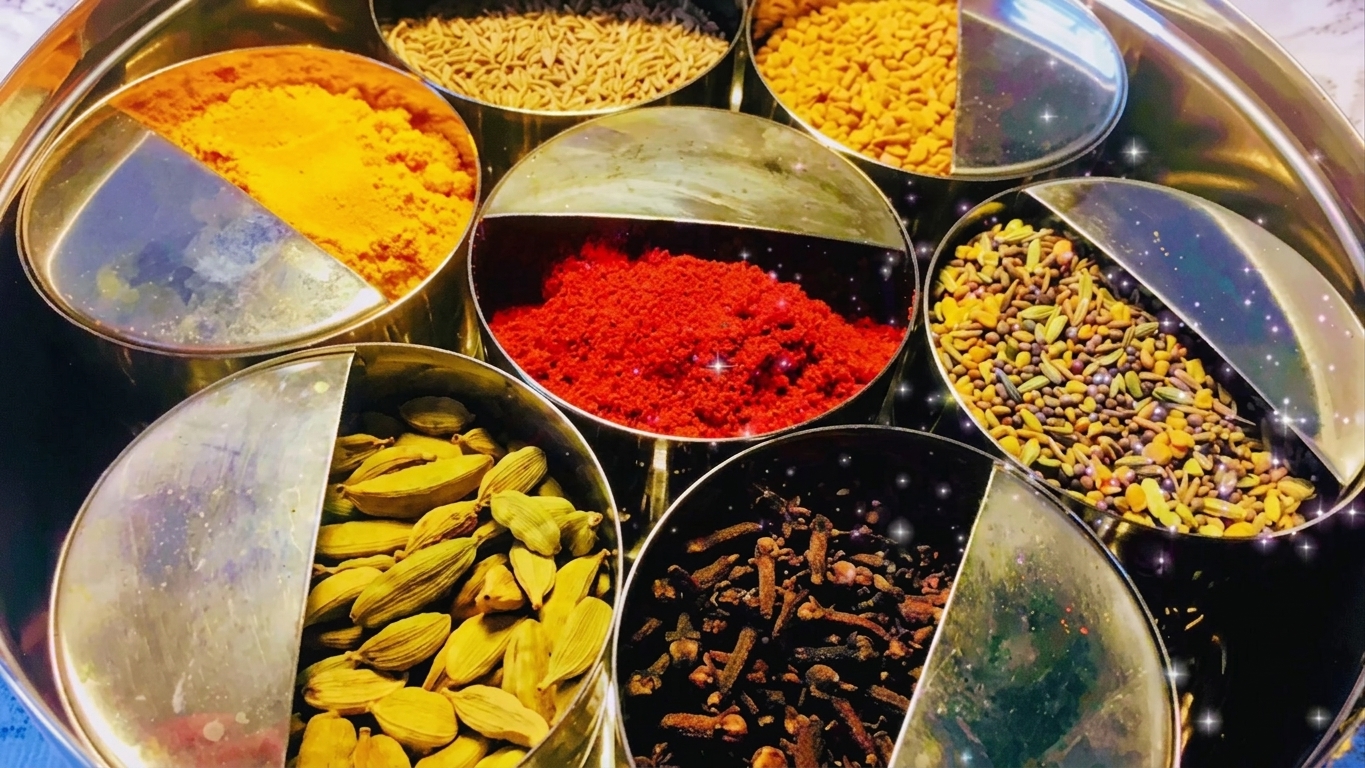
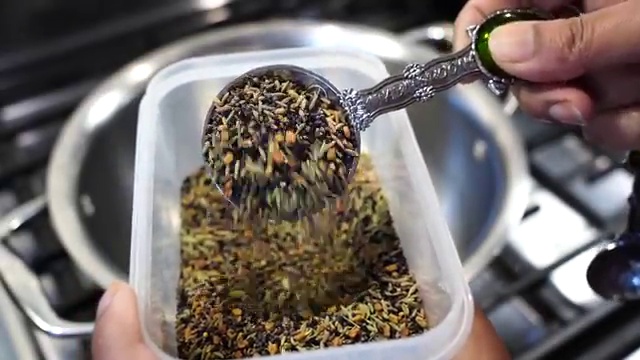
The star of the aromatic profile is panch phoron—the famous Bengali five-spice blend composed of equal parts cumin seeds (jeera), fennel seeds (saunf), nigella seeds (kalo jeere), fenugreek seeds (methi), and wild celery or black mustard seeds (radhuni or rai). When these whole seeds sizzle in hot oil alongside dried red chilies, they release an intoxicating fragrance that is sweet, pungent, earthy, and lightly bitter all at once.
The red lentils themselves are cooked gently with turmeric, chopped onions, sliced garlic, and whole green chilies until they dissolve into a luscious golden broth. The addition of slowly caramelized sliced onions lends a gentle natural sweetness that balances the warmth of the chilies, creating a harmonious and comforting bowl.
Why You’ll Love This Recipe
Whether you are an experienced Indian home cook or looking for a nourishing plant-based weeknight meal, this recipe offers immense appeal:
- Zero Pre-Soaking Required: Red lentils (masoor dal) cook from dry to velvety tender in just 25 minutes on the stovetop.
- Affordable & Pantry-Friendly: Made entirely with basic pantry staples—lentils, onions, garlic, oil, and spices.
- Nutrient-Dense Plant Protein: Rich in clean plant protein, dietary fiber, iron, folate, and anti-inflammatory turmeric.
- Naturally Vegan & Gluten-Free: A universally accessible dish suitable for clean eating, dairy-free diets, and meal preppers.
- Rich Multi-Layered Aromatics: The contrast between smooth lentils, smoky whole red chilies, and crunchy caramelized onions creates incredible textural depth.
- Customizable Consistency: Enjoy it thin and soupy over steamed rice, or simmer it thicker to scoop up with warm flatbreads.
How to Make Simple Bengali Style Masoor Dal
Making this authentic dal is an easy, two-part process: first gently boiling the lentils until smooth, then uniting them with the sizzling Bengali spice tempering. Review the overview, ingredient breakdown, and detailed photo tutorial below.
Quick Overview
- Prep Time: 10 minutes
- Cook Time: 25 minutes
- Total Time: 35 minutes
- Servings: 4 servings
- Difficulty: Easy / Beginner-Friendly
- Cuisine: Bengali / East Indian
- Course: Main Lentil Curry / Side Dish
Key Ingredients & Flavor Roles
- Red Lentils (Masoor Dal, 106g / ½ cup): Split orange lentils that cook quickly, breaking down into a naturally silky, golden soup without needing heavy blenders.
- Chopped Onion & Sliced Garlic: Simmered directly with the lentils to infuse a savory, aromatic foundation throughout the broth.
- Whole Green Chilies (2): Left whole during simmering to impart fresh herbal aroma and gentle heat without overpowering the dal.
- Ground Turmeric (½ tsp): Imparts classic warm color, earthy fragrance, and natural wellness benefits.
- Panch Phoron (½ tsp): The essential Bengali five-spice blend (cumin, fennel, nigella, fenugreek, and mustard/radhuni) that provides signature regional flavor.
- Whole Dried Red Chilies (4): Bloomed in hot oil to release a rich, smoky aroma.
- Thinly Sliced Onion (1 large): Cooked in the tadka until golden brown and caramelized to add sweet crunch and depth.
- Cooking Oil (2 tbsp for tadka + 1 tsp for dal): Mustard oil or neutral vegetable oil creates the aromatic medium for blooming whole spices.
- Fresh Coriander: Adds a bright, refreshing herbal finish just before serving.
Step-by-Step Cooking Instructions
Follow these numbered steps with matching process photos for guaranteed culinary success.
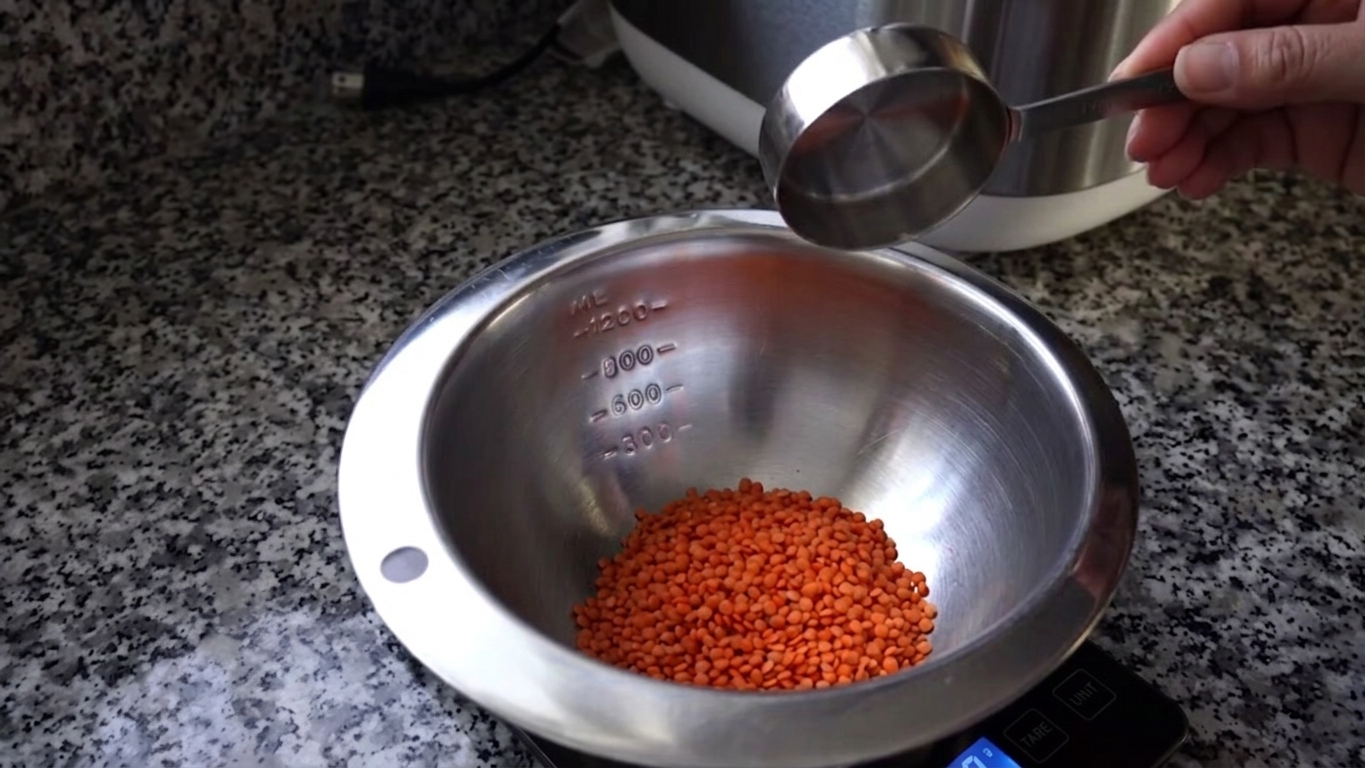
Step 1: Rinse the Red Lentils
Place ½ cup (106g) of red lentils in a bowl. Rinse thoroughly under cold running water 3 to 4 times, swirling with your fingers until the water runs clear. Chef’s Tip: Rinsing washes away excess surface starch and impurities, yielding a clean, bright flavor.

Step 2: Start Cooking the Dal with Aromatics
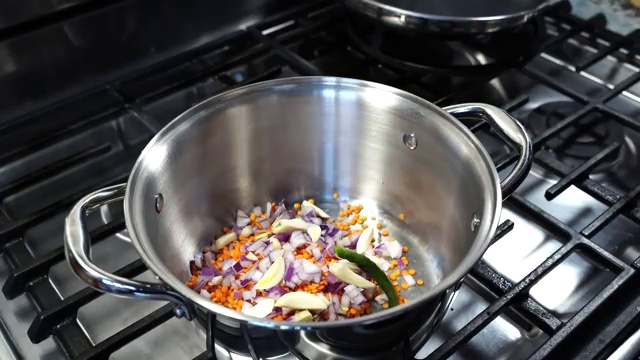
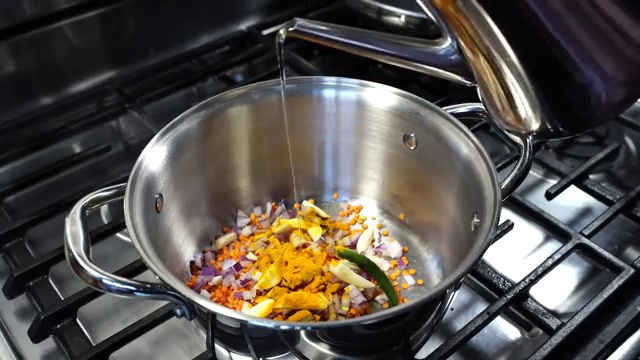
Transfer the rinsed lentils to a medium pot. Add 40g of chopped onion, 3–4 sliced garlic cloves, and 2 whole green chilies.
Add ½ teaspoon of turmeric powder and 1 teaspoon of oil. Pour in 3 cups of hot water.
Step 3: Simmer and Skim Foam
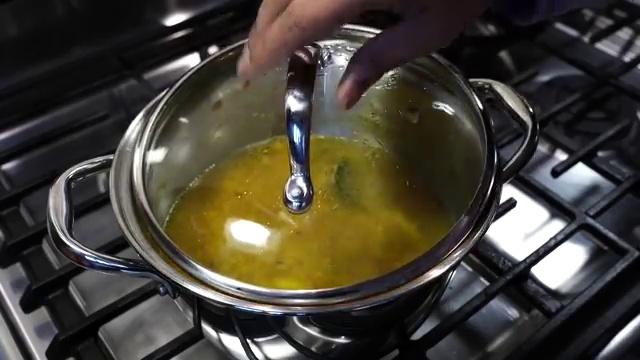
Partially cover the pot and bring the mixture to a boil over medium-high heat. Safety Rule: Never seal the lid completely, as lentils foam and can quickly boil over.

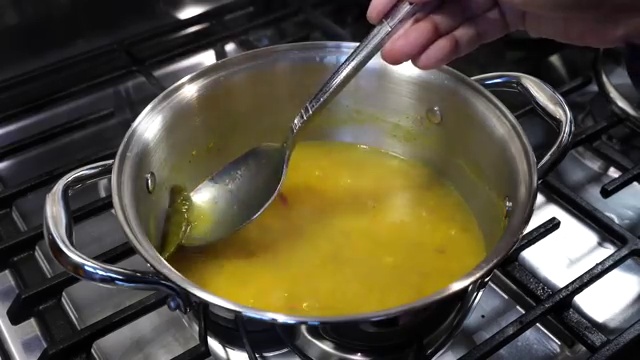
As the lentils boil, gently skim off any white foam that rises to the surface using a spoon, taking care not to scoop out the floating garlic or onions.
Step 4: Cook Until Tender and Silky
Reduce heat to medium-low and simmer for 20 to 25 minutes. The lentils will soften, swell, and naturally break apart into a creamy golden base. Add a splash of hot water if the liquid evaporates too quickly.

Step 5: Remove Chilies and Mash the Dal
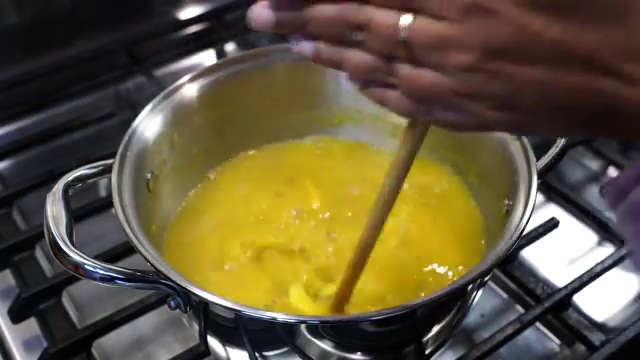
If you prefer a milder dal, fish out the whole green chilies now.

Whisk the lentils vigorously using the back of a ladle or a traditional wooden dal masher (mathni) until the texture is completely smooth and velvety.
Step 6: Prepare the Panch Phoron Tadka
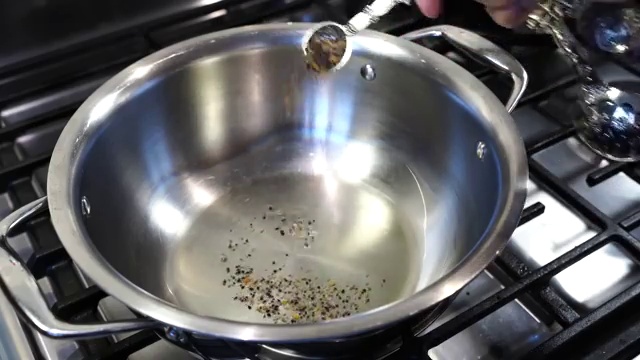
Heat 2 tablespoons of oil (mustard oil or neutral oil) in a wide skillet over medium heat. Reduce heat to low and add ½ teaspoon of panch phoron. Let the seeds splutter gently for 15 seconds until fragrant—do not let them burn.
Step 7: Add Whole Dried Red Chilies
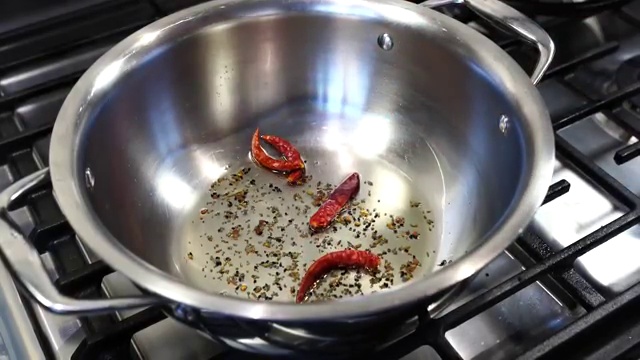
Add 4 whole dried red chilies to the aromatic oil and fry for 20–30 seconds until they turn a shade darker and release a smoky aroma.

Step 8: Brown the Sliced Onions
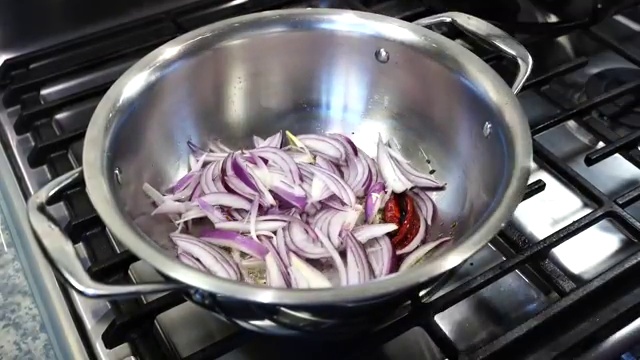
Add the thinly sliced onion and a pinch of salt to the pan.
Sauté over medium-low heat for 6 to 8 minutes, stirring frequently, until the onions turn rich golden brown and caramelized.
Step 9: Reserve Onions for Garnish
Scoop out a generous tablespoon of the crispy browned onions and set them aside on a small plate for finishing.
Step 10: Pour Dal into the Sizzling Tadka
Carefully pour the smooth cooked masoor dal directly into the skillet with the sizzling panch phoron and remaining browned onions. Stir vigorously to emulsify the spiced oil into the lentils.
Add 2 teaspoons of salt (adjust to taste) and stir thoroughly.
Step 11: Bring to a Rolling Boil
Increase heat and let the dal come to a gentle rolling boil for 2 to 3 minutes. Adjust consistency by adding a splash of hot water for a soupy dal, or simmering longer for a thicker consistency.

Step 12: Taste and Check Seasoning
Taste the dal. It should taste silky, lightly savory, and infused with the earthy sweetness of panch phoron and toasted chilies.
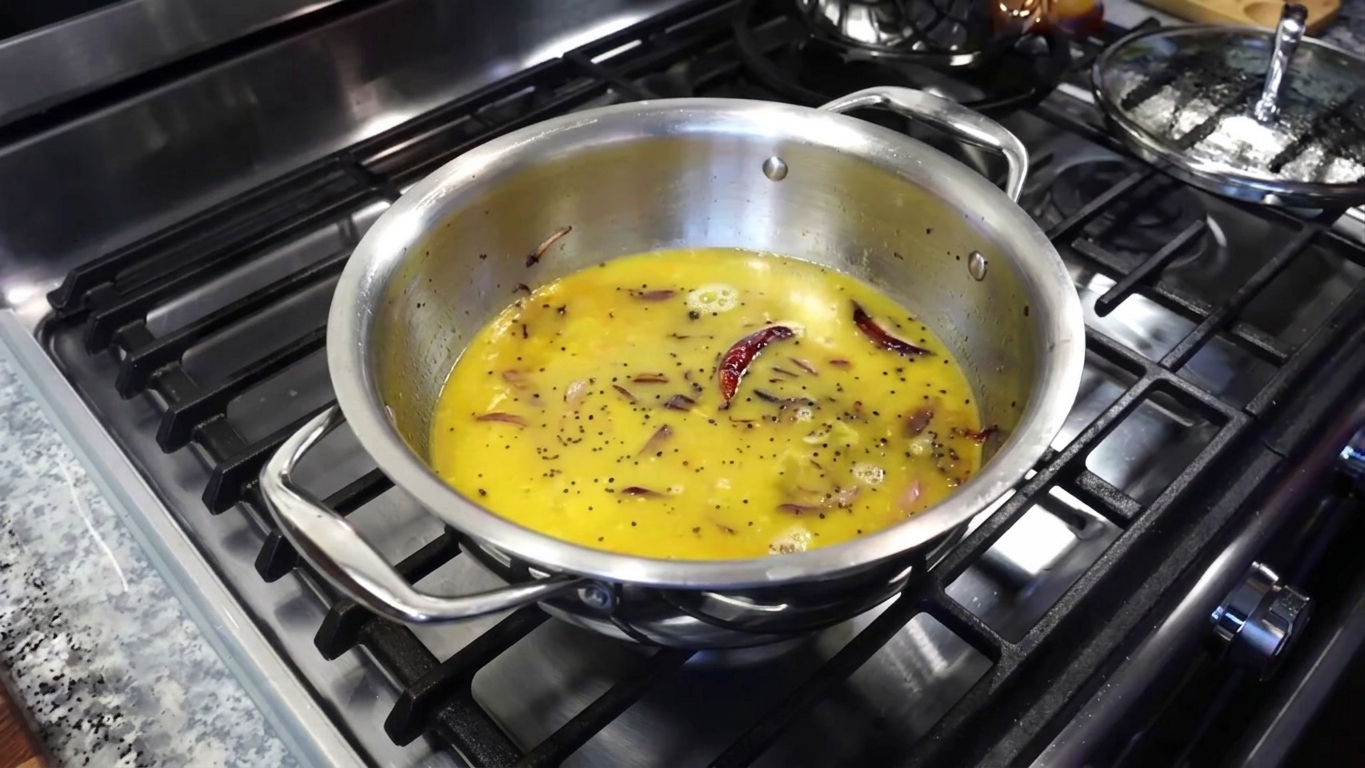
Step 13: Garnish and Serve
Turn off the heat. Stir in freshly chopped coriander leaves.
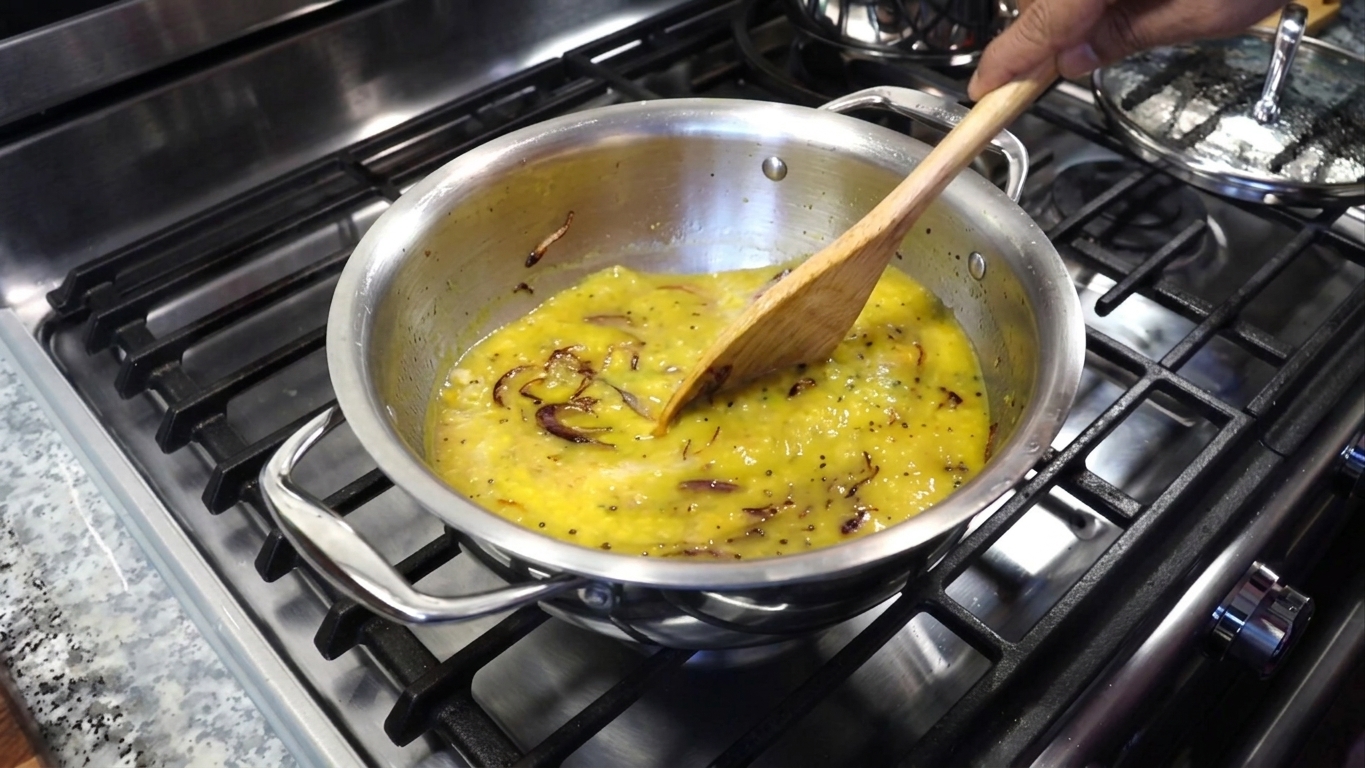
Scatter the reserved crispy browned onions across the top.
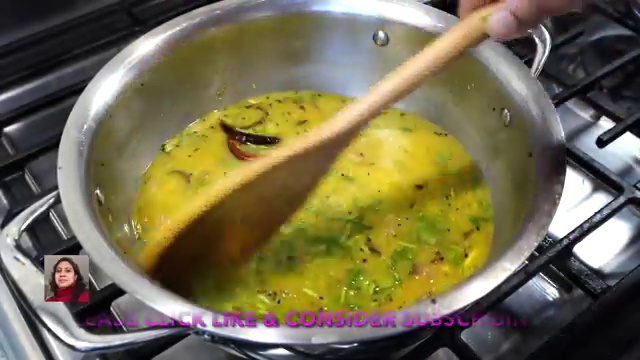
Ladle hot over steamed white basmati rice and enjoy immediately!
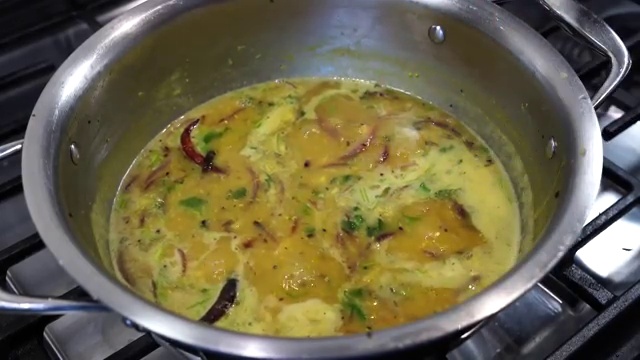
Stovetop Pressure Cooker & Instant Pot Method
If you are short on time, this recipe adapts effortlessly to modern pressure cookers:
- Instant Pot / Electric Pressure Cooker: Add rinsed lentils, chopped onion, sliced garlic, whole green chilies, turmeric, 1 tsp oil, and 2 cups of water to the inner pot. Secure the lid, seal the valve, and cook on High Pressure for 12 minutes. Allow a 10-minute natural pressure release, then vent remaining steam. Mash the dal, prepare the tadka using the Sauté function in a separate skillet, and stir together.
- Traditional Stovetop Pressure Cooker: Add the lentils, aromatics, turmeric, oil, and 1½ to 2 cups of water. Lock the lid and cook over medium-high heat for 3 to 4 whistles (about 10 minutes). Let the pressure drop naturally before opening and tempering.
What to Serve With Bengali Masoor Dal
In Bengali culture, dal is rarely eaten alone—it is the golden centerpiece connecting an array of complementary vegetarian sabjis, curries, and fried delicacies. Here are our favorite menu combinations:
- The Classic Rice & Thali Foundation: Spoon generously over steaming white basmati rice or pair with our easy vegetable masala rice alongside a complete daily Bengali dal, okra sabji & cabbage curry lunch thali or our everyday Indian home-style meal.
- Crispy Vegetable Side Dishes: Serve with crunchy crispy aloo beans dry sabji, fragrant Bengali potato and dill leaves stir-fry, or Bengali aloo fulkopir tarkari.
- Rich Curries & Paneer Classics: Balance this light dal with rich aloo dum with green peas, creamy simple palak paneer, or our nourishing plant-based Indian home meal.
- Seafood & Poultry Feasts: Pair alongside authentic Bengali macher jhal (spicy fish curry), sizzling crispy air fryer tandoori fish, or ultimate butter chicken (murgh makhani).
- Hearty Legumes: Enjoy with a side of savory Bengali-style rajma curry.
- Condiments & Festive Sweets: Add a dollop of tangy homemade green mango pickle (aam ka aachar) and conclude your meal with a warm bowl of festive carrot halwa (gajar ka halwa).
Top Tips for Perfect Bengali Dal
To achieve the velvety consistency and authentic aroma of a traditional Bengali kitchen, keep these chef tips in mind:
- Always Use Hot Water: Adding cold water while simmering or adjusting dal consistency shocks the cooking process and can cause lentils to turn grainy. Always use boiling or hot water.
- Control Heat for Panch Phoron: The whole spices (especially fenugreek and mustard) can scorch quickly and turn bitterly acrid. Always lower heat to medium-low before dropping the seeds into the oil.
- Caramelize Onions Patiently: Do not rush the onions over high heat. Slow browning brings out their natural sugars, providing the sweet counterpoint to the earthy spices.
- Keep Green Chilies Whole: Leaving the green chilies whole imparts their fresh floral perfume and subtle flavor into the simmering lentils without blowing out the heat level.
- Adjust for Natural Cooling Thickening: Dal thickens substantially as it cools. Aim for a slightly looser, soupier texture while hot on the stove; it will settle into the perfect consistency at the table.
Storing and Reheating Tips
Bengali masoor dal keeps exceptionally well, making it a fantastic candidate for batch cooking and meal prepping:
- Refrigeration: Allow leftover dal to cool completely to room temperature. Transfer to an airtight glass container and refrigerate for up to 4 to 5 days.
- Stovetop Reheating (Recommended): Pour chilled dal into a saucepan over medium-low heat. Because red lentils absorb liquid as they sit, add ¼ to ½ cup of hot water and whisk gently until heated through. Taste and adjust salt if needed.
- Microwave Reheating: Heat in a microwave-safe bowl in 60-second intervals, stirring between bursts, with a splash of warm water.
- Freezing: Masoor dal freezes beautifully for up to 3 months in freezer-safe containers. Thaw in the refrigerator overnight before reheating on the stove.
Frequently Asked Questions
Do red lentils (masoor dal) require pre-soaking?
No. Split red lentils are delicate and cook very rapidly. A thorough rinse under cold running water is all you need before boiling.
What if I don’t have panch phoron?
You can make a quick homemade blend by mixing equal parts of cumin seeds, fennel seeds, nigella seeds (kalonji), fenugreek seeds, and black mustard seeds. If missing several components, a simple tempering of cumin seeds and sliced garlic will still make a delicious dal.
Can I use mustard oil for the tadka?
Yes! Traditional Bengali cooking frequently uses raw mustard oil (shorsher tel). Heat the mustard oil until it reaches a light smoking point, then lower the heat before adding spices to mellow its pungency and release deep, authentic flavor.
Can I substitute yellow lentils (moong dal or toor dal)?
Yes, though cooking times will differ. Split yellow moong dal cooks in approximately 20–25 minutes, while pigeon peas (toor dal) require longer simmering (40–45 minutes) or a pressure cooker.
Bengali Masoor Dal Recipe Card & Cooking Summary
Simple Bengali Style Masoor Dal
Silky, comforting red lentils simmered with turmeric and garlic, finished with a fragrant panch phoron, dried red chili, and caramelized onion tadka.
Prep Time: 10 mins | Cook Time: 25 mins | Total Time: 35 mins | Servings: 4 | Cuisine: Bengali | Diet: Vegan / Gluten-Free
Ingredients Summary
- Dal Base: 106g (½ cup) red lentils (masoor dal), 40g chopped onion, 3–4 sliced garlic cloves, 2 whole green chilies, ½ tsp turmeric powder, 1 tsp oil, 3 cups hot water
- Bengali Tadka: 2 tbsp oil (or mustard oil), ½ tsp panch phoron, 4 whole dried red chilies, 1 large onion (thinly sliced), 2 tsp salt (to taste)
- Garnish: Reserved browned onions, chopped fresh coriander
Quick Instructions
- Rinse red lentils until water runs clear. Add to pot with chopped onion, sliced garlic, whole green chilies, turmeric, 1 tsp oil, and 3 cups hot water.
- Bring to boil partially covered; skim off surface foam. Simmer over medium-low heat for 20–25 minutes until lentils are completely tender.
- Remove green chilies if desired; mash dal with a ladle or whisk until silky smooth.
- In a separate skillet, heat 2 tbsp oil. Bloom ½ tsp panch phoron and 4 dried red chilies on low heat. Add sliced onions and cook until rich golden brown.
- Reserve 1 tbsp browned onions for garnish. Pour cooked dal directly into the sizzling tadka pan. Add 2 tsp salt, stir well, and bring to a rolling boil for 2–3 minutes.
- Turn off heat, garnish with fresh coriander and reserved crispy onions, and serve hot with steamed rice.
Pure Bengali Comfort in Every Spoonful
Simple Bengali Style Masoor Dal is a timeless reminder that great home cooking does not require complex ingredients or elaborate techniques. With humble red lentils, everyday aromatics, and the enchanting fragrance of sizzling panch phoron, you can create a wholesome, deeply satisfying meal in just over half an hour.
Ladled generously over a mound of fragrant basmati rice alongside your favorite vegetable stir-fry, it brings the warmth and nostalgia of a traditional Kolkata kitchen straight to your dining table. Gather your ingredients and treat yourself to this pure bowl of golden comfort tonight!