
Follow Me On Social Media!


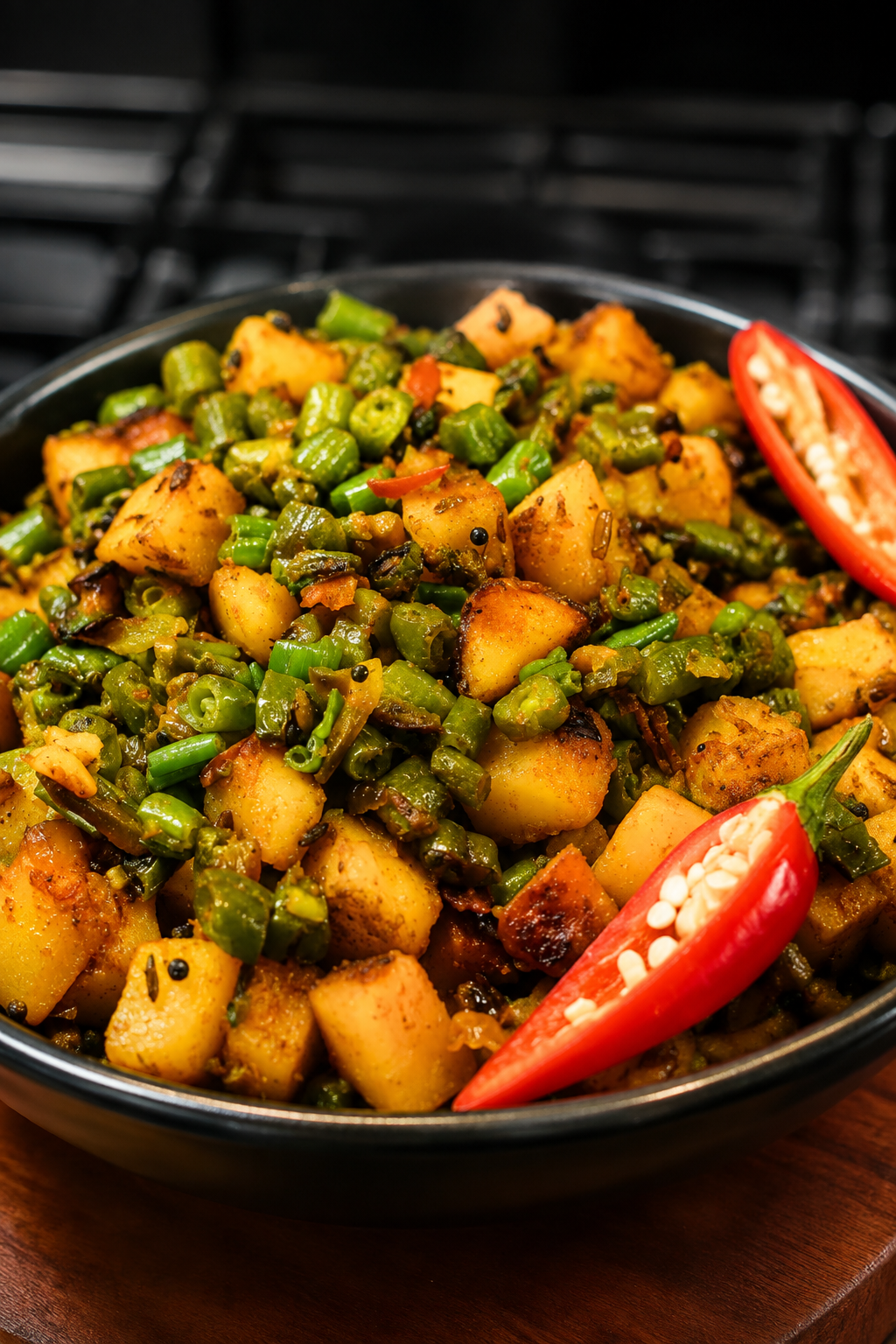
Few dishes showcase the comforting genius of everyday Indian home cooking quite like Aloo Beans Dry Sabji. Combining tender, golden-edged potato cubes with crisp, vibrant green beans, this classic North Indian stir-fry (often called sukhi aloo beans) is seasoned with an aromatic tempering of black mustard seeds, cumin, lightly browned garlic, and everyday warming spices. Whether you need a speedy 30-minute side dish for weeknight dinners, a nutritious meal-prep component, or a spill-free lunchbox favorite, this one-pan vegetable sabji delivers rich, savory flavor with effortless simplicity.
In traditional Indian home kitchens, everyday meals balance rich saucy curries with dry vegetable preparations known as sukhi sabji. Unlike restaurant curries that drown ingredients in heavy gravies or cream, a dry sabji allows the fresh produce to take center stage. The vegetables cook directly in seasoned oil, allowing their natural juices to caramelize while soaking up the earthy warmth of ground cumin, turmeric, and vibrant Kashmiri chili.
What makes this specific Aloo Beans recipe a perennial household favorite is its remarkable texture and contrast. By dicing the potatoes small and sautéing them in a wide skillet, the potato edges turn delightfully golden while remaining soft and fluffy inside. Meanwhile, the green beans retain their tender-crisp bite and bright color without turning mushy. Sautéed with sweet onions, roughly chopped garlic, and a touch of ripe tomato to bind the spices, this dish pairs wonderfully with warm rotis, flaky parathas, or a soothing bowl of dal and rice.
Table of Contents
What Is Aloo Beans Sabji?
In Hindi culinary terminology, aloo translates to potato, beans refers to fresh green or French beans, and sabji (or sabzi) means a spiced vegetable dish. Aloo Beans Sabji is therefore a pan-fried, dry-style vegetable curry that is an essential cornerstone of North and Western Indian home dining.
Unlike wet curries or gravy dishes that require blending onion-tomato pastes and simmering in water, this recipe relies on a direct pan-searing and steam-roasting technique. The cooking begins with a classic tadka (tempering): whole cumin seeds and black mustard seeds are crackled in hot oil to release their essential aromatic oils. Roughly chopped garlic cloves are lightly browned in the infused oil, imparting a deeply savory undertone before the potatoes and string beans are introduced.
As the vegetables sauté, a simple blend of ground spices—earthy turmeric, mild Kashmiri red chili powder, and ground cumin or sabji masala—coats every piece. A single chopped tomato provides just enough natural acidity and moisture to help the spices cling evenly without creating a wet sauce. The pan is then covered briefly, allowing the trapped steam to tenderize the vegetables in their own juices. The result is a vibrant, deeply seasoned vegetable side dish where every bite offers an enjoyable interplay of textures and authentic home-style flavors.
Why You’ll Love This Recipe
Whether you are a seasoned cook of Indian cuisine or trying your hand at home-style sabjis for the first time, this Aloo Beans recipe is engineered for foolproof success. Here is why it belongs in your regular kitchen repertoire:
- Quick One-Pan Preparation: The entire dish cooks in a single wide skillet in under 30 minutes, minimizing cleanup and making it ideal for busy weeknights.
- Perfect Texture Contrast: Small-diced potatoes become tender with golden, crispy edges while the green beans maintain their vibrant color and snappy bite.
- 100% Vegan & Naturally Gluten-Free: Made entirely from wholesome whole vegetables and spices with no dairy, gluten, or artificial additives.
- Ultimate Lunchbox Hero: Because it contains no loose gravy or sauce, it packs neatly into tiffins and lunchboxes alongside rotis or parathas without messy leaks.
- Accessible Everyday Spices: Uses standard pantry staples—cumin, mustard seeds, garlic, turmeric, and chili—without requiring complex or hard-to-find spice blends.
- Easily Customizable Heat: Mild and kid-friendly with Kashmiri chili, but easily elevated with chopped fresh green chilies for those who enjoy bold heat.
How to Make Aloo Beans Dry Sabji
Making a restaurant-worthy dry sabji comes down to heat control, pan space, and cutting consistency. Using a wide skillet ensures the vegetables fry rather than steam in their own moisture. Follow our structured overview, ingredient breakdown, and detailed step-by-step visual instructions below.
Quick Overview
- Prep Time: 10 minutes
- Cook Time: 20 minutes
- Total Time: 30 minutes
- Servings: 4 servings
- Difficulty: Easy / Beginner-Friendly
- Cuisine: North Indian / Home-Style
- Course: Side Dish / Main Lunch
Key Ingredients & Flavor Roles
- Potatoes (Aloo): 2 medium potatoes (about 290g), peeled and diced into uniform ½-inch cubes. Small cubes cook rapidly and brown beautifully in the skillet.
- Fresh Green Beans (French Beans): 200g of fresh green beans, trimmed and sliced into ½-inch pieces to match the size of the potato dice for even cooking.
- Whole Cumin & Black Mustard Seeds: ½ teaspoon each, bloomed in hot oil to create an aromatic foundation with warm, nutty, and peppery notes.
- Fresh Garlic: 3 large cloves, roughly chopped rather than minced. Rough cuts prevent burning and provide delicious caramelized garlic morsels throughout the dish.
- Onion & Tomato: 1 small finely chopped onion provides natural sweetness, while 1 small ripe tomato adds acidity and gentle moisture to bind the spices to the vegetables.
- Ground Spices: ½ teaspoon ground turmeric for vibrant golden color, ½ teaspoon mild Kashmiri red chili powder for rich hue and gentle warmth, and 1 teaspoon ground cumin or sabji masala for deep earthy aroma.
- Fresh Garnish: Chopped green onion greens or fresh coriander (cilantro) leaves for a vibrant, herbaceous finish.
Step-by-Step Instructions
Follow these numbered steps accompanied by process photos to create this delicious sabji effortlessly.
Step 1: Prep and Dice the Produce
Wash the potatoes, green beans, onion, and tomato thoroughly. Peel the potatoes and dice them into uniform ½-inch cubes. Trim the stringy ends from the green beans and cut them into ½-inch pieces. Finely chop the onion and tomato, and roughly chop the garlic cloves. Keeping all vegetables similarly sized ensures they cook evenly in the pan.
Step 2: Heat Oil and Bloom the Whole Spices
Place a wide, heavy-bottomed skillet over medium heat and add 2 tablespoons of neutral cooking oil or mustard oil. Once the oil is shimmering hot, lower the heat slightly and add ½ teaspoon of cumin seeds and ½ teaspoon of black mustard seeds. Allow the mustard seeds to vigorously crackle and pop for 15–20 seconds to release their essential oils without letting them burn.

Step 3: Sauté the Garlic
Add the roughly chopped garlic to the sizzling spice oil. Sauté over low to medium heat for 30–45 seconds, stirring gently, until the garlic turns lightly golden and releases a rich, nutty fragrance. Chef’s Tip: Avoid mincing the garlic finely, as tiny pieces scorch quickly in hot oil.

Step 4: Pan-Fry the Diced Potatoes
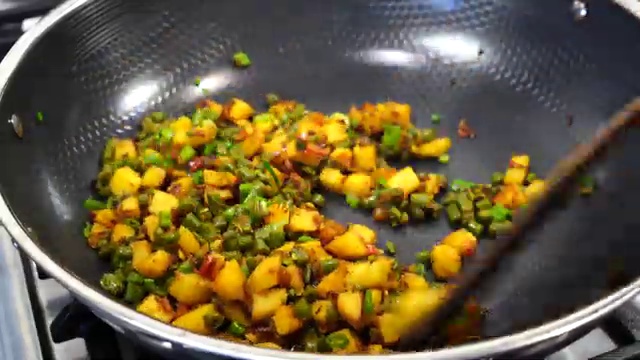
Add the diced potatoes to the skillet in an even layer. Increase the heat to medium-high and stir-fry for 3 to 4 minutes. The goal at this stage is not to cook the potatoes completely through, but to allow their surfaces to develop a light golden sear and absorb the garlic-spice infused oil.

Step 5: Add Green Beans and Onions
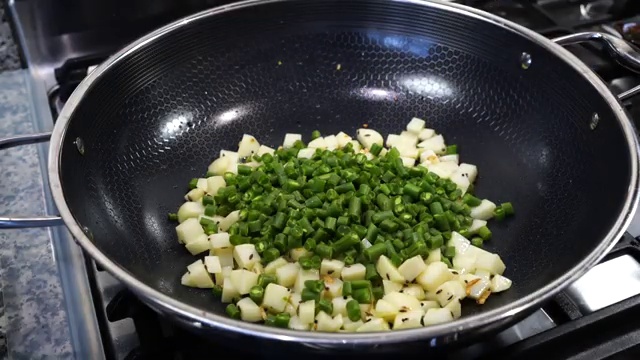
Add the chopped green beans and finely chopped onions into the skillet with the potatoes. Stir-fry everything together over medium-high heat for about 1 to 2 minutes so the beans get coated in oil and the onions begin turning translucent.
Step 6: Season with Ground Spices
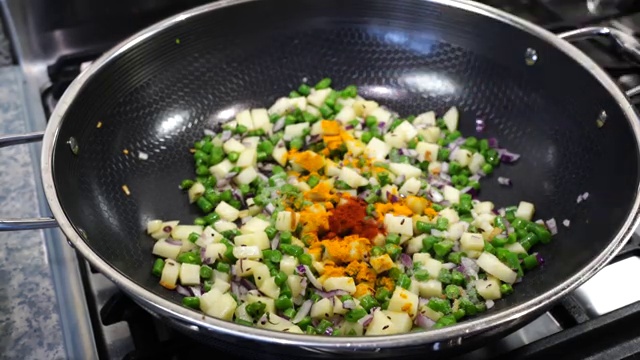
Reduce the heat to medium. Add ½ teaspoon of turmeric powder, ½ teaspoon of Kashmiri red chili powder, 1 teaspoon of ground cumin (or sabji masala), and salt to taste. Toss and stir continuously for 1 minute until the spices are evenly distributed and lightly toasted.
Step 7: Add Tomato, Cover and Cook
Add the finely chopped tomato and stir well. The natural juices from the tomato will deglaze the skillet and help the spices form a light glaze over the vegetables. Cover the pan tightly with a lid, lower the heat to medium-low, and cook undisturbed for 5 to 6 minutes so the vegetables steam gently in their own moisture.

Step 8: Check Texture and Doneness
Remove the lid and give the sabji a gentle stir. Test a potato cube with a fork or spatula—it should be tender and easily pierced without crumbling, while the green beans should retain their shape and a slight snap. If the potatoes need a little more time, cover and cook for an additional 2–3 minutes over low heat.

Step 9: Taste, Adjust and Garnish
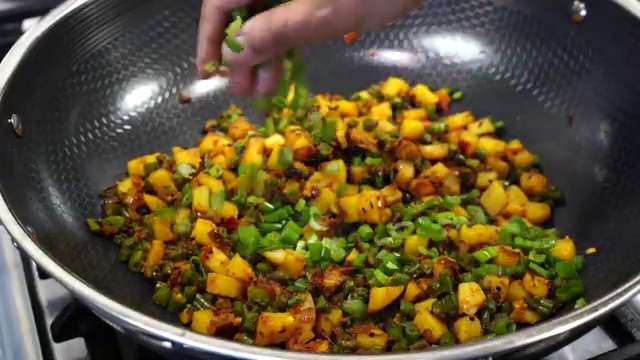
Taste the sabji and adjust salt or chili powder according to your personal preference. Turn off the heat and fold in chopped green onion greens or fresh coriander leaves. Serve hot!
What to Serve With Aloo Beans Sabji
Thanks to its versatile dry texture and savory spiced profile, Aloo Beans Sabji complements a wide variety of Indian breads, grains, and main curries. Here are our favorite serving recommendations:
- With Fresh Flatbreads: Pair piping-hot Aloo Beans with puffed whole wheat rotis, phulkas, or flaky layered parathas for a quintessential North Indian lunch.
- Comforting Rice & Dal Meal: Serve alongside steamed basmati rice and our simple Bengali style masoor dal for an ultra-soothing, wholesome dinner.
- Part of an Elaborate Thali: Include this sabji alongside our daily Bengali dal, okra sabji & cabbage curry lunch thali or our everyday Indian home-style thali.
- Pickles & Condiments: A small spoonful of homemade green mango pickle (aam ka aachar) or chilled cucumber raita adds the perfect tangy, cooling contrast.
- Alongside Potato & Vegetable Curries: If building a vegetarian feast, pair this dry dish with saucier preparations such as rich aloo dum with green peas, Bengali aloo fulkopir tarkari, or Bengali potato and dill leaves stir-fry.
- Paneer & Plant-Based Mains: Balance the meal with simple palak paneer, a nourishing plant-based Indian home meal, or protein-rich moong dal chilla.
- Flavorful Grains & Legumes: Serve with easy vegetable masala rice or hearty Bengali-style rajma curry.
- Rich Chicken & Fish Mains: For meat and seafood lovers, this dry sabji serves as the ideal vegetable side to ultimate butter chicken (murgh makhani) or authentic Bengali macher jhal (spicy fish curry).
Top Tips for Perfect Aloo Beans Sabji
To ensure your dry sabji turns out restaurant-quality every time, keep these essential chef tips in mind:
- Use a Wide Skillet: Avoid cooking this recipe in a deep, narrow saucepan. A wide, heavy skillet or flat kadai gives the vegetables ample surface contact with the oil, promoting frying rather than trapping moisture.
- Uniform Vegetable Sizing: Dice the potatoes into small ½-inch cubes so they cook at roughly the same rate as the chopped green beans. Larger chunks will leave you with hard potatoes or overcooked, soggy beans.
- Never Burn the Mustard Seeds: Add mustard seeds to hot oil and allow them to crackle, but reduce heat if they start smoking. Burnt mustard seeds turn bitter and can ruin the entire flavor base.
- Rough-Chop the Garlic: Slicing or roughly chopping garlic cloves ensures they develop sweet, caramelized golden notes without burning during the frying process.
- Moderate the Tomato: One small tomato is plenty. Adding too much tomato adds excess liquid and acidity, turning your crisp dry sabji into a wet curry.
- Use Kashmiri Chili for Color: Kashmiri red chili powder provides a beautiful, appetizing deep-red hue with mild warmth. If you prefer higher spice, supplement with a finely slit fresh green chili.
Storing and Reheating Tips
Aloo Beans Sabji holds up remarkably well, making it a fantastic candidate for meal prepping and busy weekday lunches:
- Refrigerator Storage: Allow the cooked sabji to cool completely to room temperature. Transfer to an airtight glass container and store in the refrigerator for up to 4 to 6 days.
- Best Reheating Method (Stovetop): For optimal texture, reheat the sabji in a lightly oiled skillet over medium-low heat for 3–4 minutes. This crisps up the potato edges and restores the fresh aroma.
- Microwave Reheating: If packing for an office or school lunch, reheat in a microwave-safe container for 60–90 seconds on medium power.
- Freezing Note: We do not recommend freezing cooked aloo beans sabji. Potatoes tend to become watery and mealy upon thawing, and green beans lose their pleasant crisp bite.
Frequently Asked Questions
Can I use regular russet or red potatoes?
Yes! Any standard potato—such as Yukon Gold, Russet, red potatoes, or baby potatoes—works great. Yukon Gold potatoes are especially recommended because they hold their shape well while offering a creamy interior.
Can I make this recipe with frozen green beans?
While fresh green beans yield the best crisp-tender texture, frozen cut green beans can be used in a pinch. Thaw and pat them completely dry with paper towels before adding to the pan, and reduce the covered cooking time by 2 minutes to prevent them from becoming too soft.
What can I use instead of sabji masala?
Ground cumin paired with a pinch of ground coriander and a dash of garam masala makes a wonderful substitute if you don’t have dedicated sabji masala in your spice rack.
Why is this sabji so popular for lunchboxes?
Because it is a dry vegetable preparation without liquid gravy, it can be wrapped inside rotis (as a kathi roll) or packed alongside parathas without leaking, keeping your lunchbox clean and mess-free.

Aloo Beans Sabji Recipe Card & Cooking Summary
Aloo Beans Dry Sabji (Spiced Potato & Green Beans)
A quick, flavorful 30-minute North Indian dry vegetable stir-fry made with golden diced potatoes, crisp green beans, aromatic garlic, and warm spices.
Prep Time: 10 mins | Cook Time: 20 mins | Total Time: 30 mins | Servings: 4 | Cuisine: North Indian | Diet: Vegan / Gluten-Free
Ingredients Summary
- 2 medium potatoes (290g), peeled and diced into ½-inch cubes
- 200g fresh green beans, trimmed and sliced into ½-inch pieces
- 2 tbsp cooking oil (neutral or mustard oil)
- ½ tsp cumin seeds & ½ tsp black mustard seeds
- 3 large garlic cloves, roughly chopped
- 1 small onion (100g), finely chopped
- 1 small ripe tomato, finely chopped
- ½ tsp ground turmeric
- ½ tsp Kashmiri red chili powder
- 1 tsp ground cumin or sabji masala
- Salt to taste
- Chopped green onion greens or fresh coriander for garnish
Quick Instructions
- Heat oil in a wide skillet over medium heat. Crackle cumin seeds and mustard seeds for 15 seconds.
- Add roughly chopped garlic and sauté for 30 seconds until lightly golden.
- Add diced potatoes; pan-fry over medium-high heat for 3–4 minutes until lightly golden.
- Add green beans and chopped onion; sauté for 1–2 minutes to coat in seasoned oil.
- Stir in turmeric, Kashmiri chili powder, ground cumin, and salt. Cook for 1 minute.
- Add chopped tomato, stir, cover with a lid, and cook on low heat for 5–6 minutes until potatoes and beans are tender-crisp.
- Garnish with green onions or fresh coriander and serve warm with roti, paratha, or rice and dal.
Final Thoughts
Aloo Beans Dry Sabji is a wonderful reminder that comforting, gourmet-level Indian food does not require complex gravies or hours in the kitchen. With crisp green beans, tender golden potatoes, and an aromatic tempering of whole seeds and garlic, this simple one-pan recipe delivers rich satisfaction in every bite.
Serve it hot off the stove with puffed rotis, pack it into a lunchbox for a mess-free midday meal, or plate it alongside a comforting bowl of dal and rice. Try this easy recipe today and experience the timeless appeal of authentic Indian home cooking!